WeChat Official Account
WeChat Official Account
 APP Download

Scan the QR code Download the STEM STAR APP
With the rapid development of artificial intelligence, more and more children are beginning to learn Python programming. Some children even start to learn Python from the second or third grade.
STEM STAR has found that many Python courses available in the market do not align with children's developmental characteristics and cognitive levels. Moreover, current Python courses primarily focus on software programming and do not cover hardware applications.
Against this backdrop,STEM STAR's newly upgraded Python AI course brings revolutionary Python learning to students, introducing them to artificial intelligence!
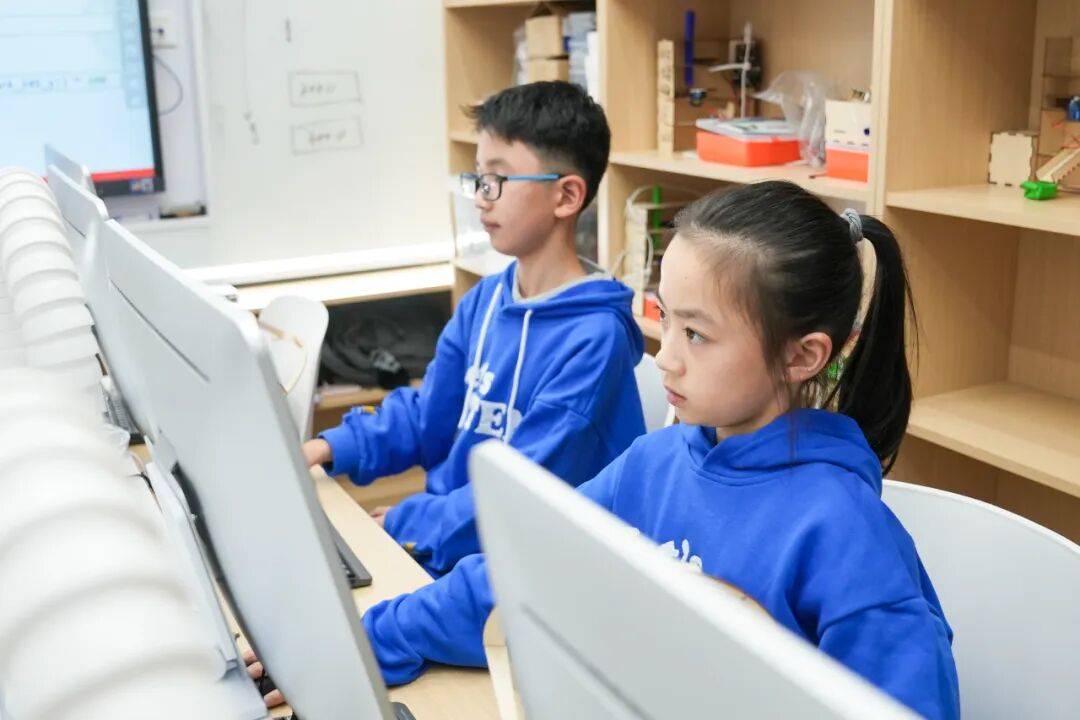
Let's take a look at what highlights there are in STEM STAR's Python AI course
01 What distinguishes the STEM STAR Python AI course?
The STEM STAR course Python AI is suitable for children aged 9-14, with a total of 4 stages,Fully refer to the national AI curriculum design standards and proceed step by step.
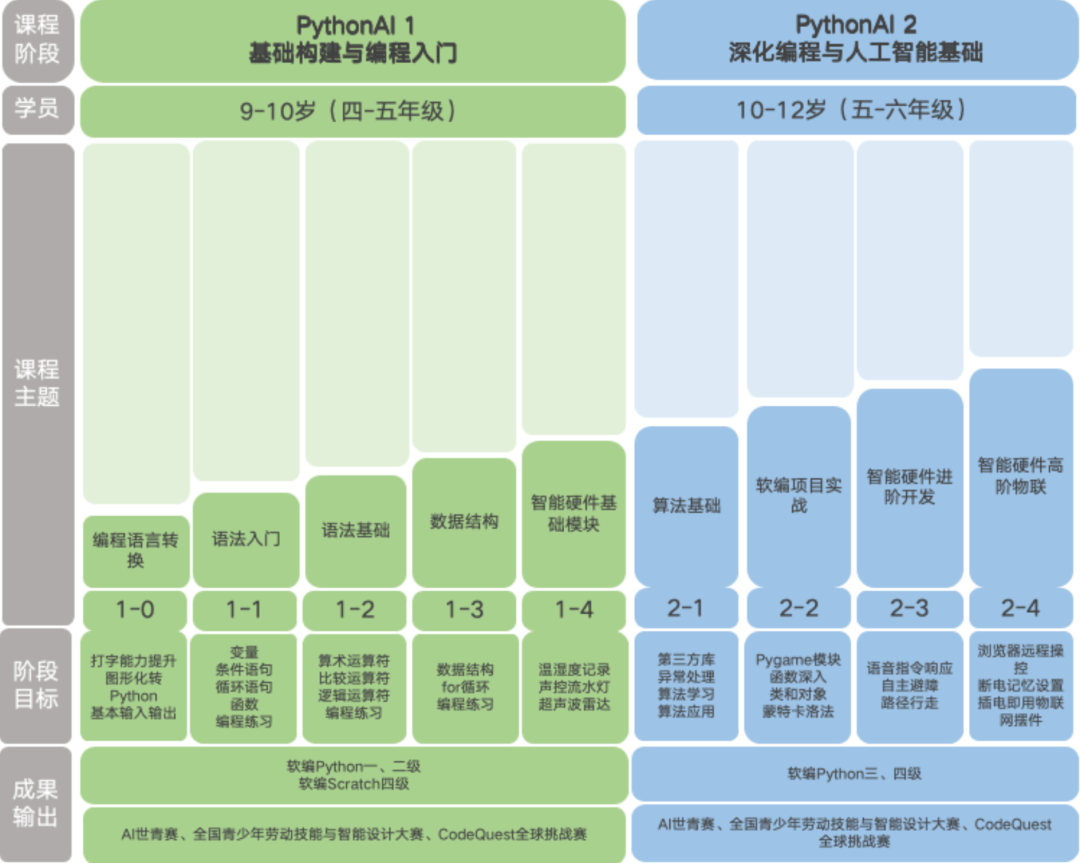
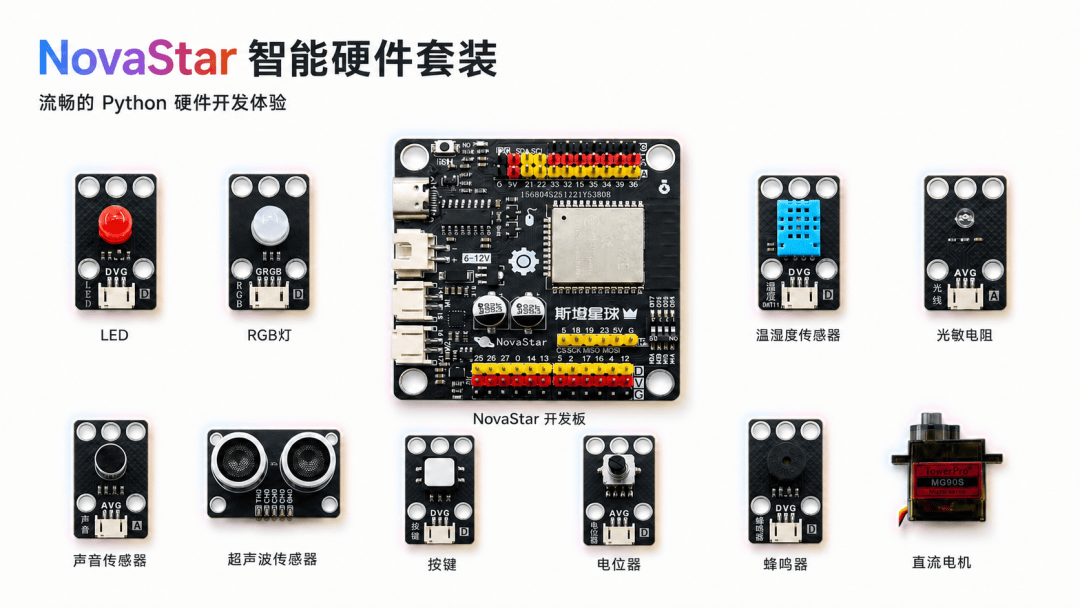
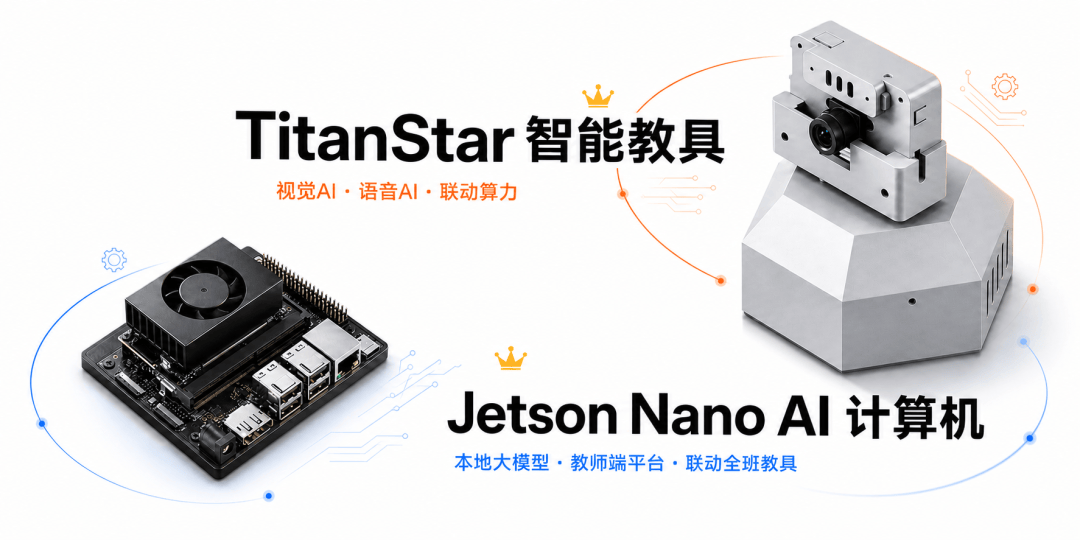
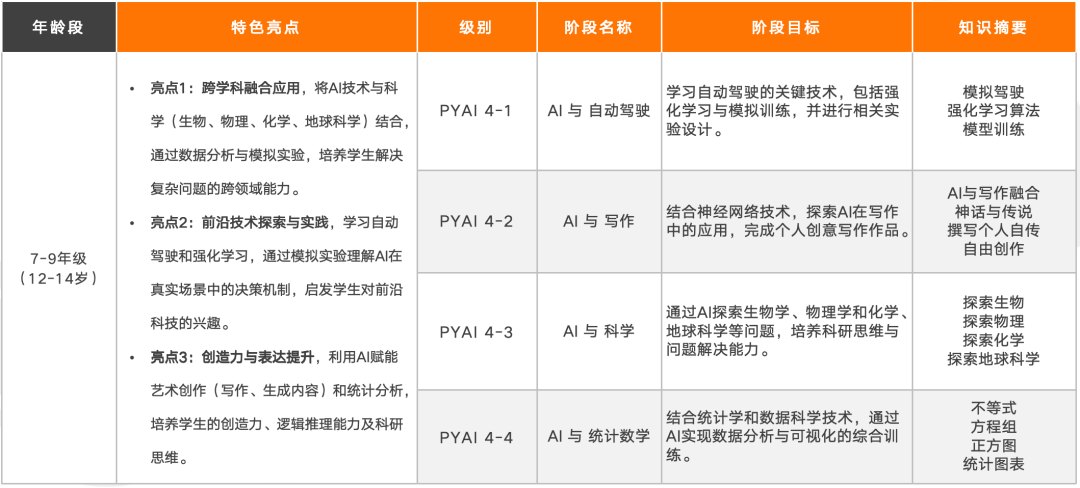
▲Python AI 4 Course Outline
Python AI 4 Course Setup
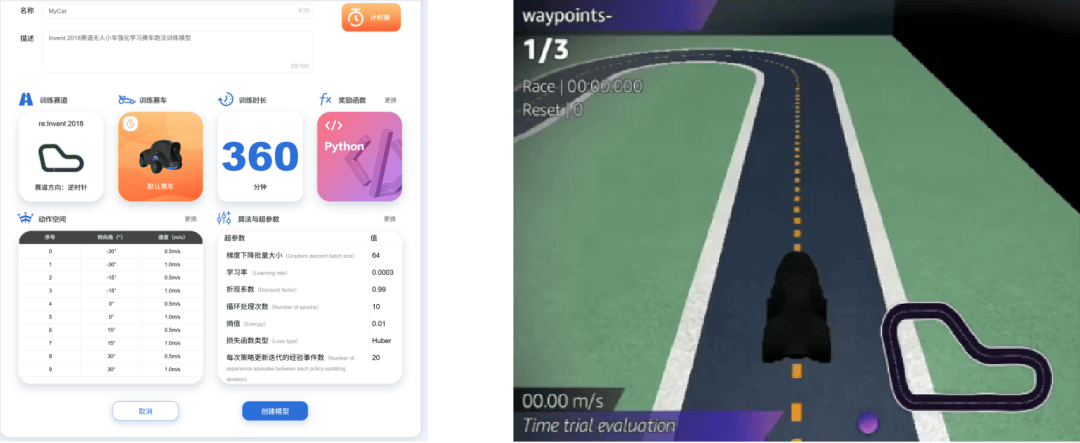
① Python AI 4-1 AI and Autonomous Driving
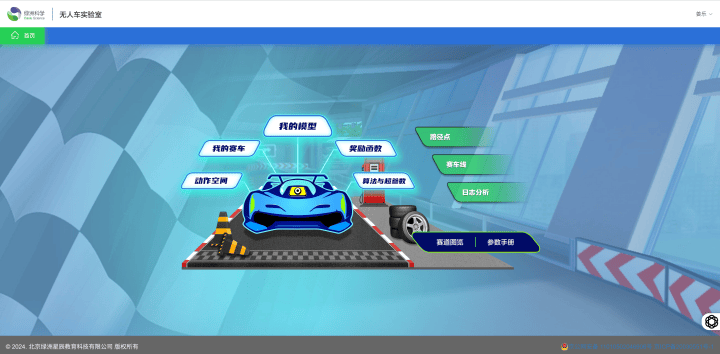
The first stage will lead students into the world of AI and autonomous driving. Starting with an understanding of the history of automobile development and autonomous driving technology, students will delve into the core concepts of reinforcement learning (agent, state space, action space, reward function) and master classic algorithms of reinforcement learning. They will use a simulation platform to perform visual detection (lane lines, pedestrians), learn map and path planning, trajectory tracking control, and ultimately train and optimize their own autonomous driving model on the Oasis autonomous vehicle platform.
② Python AI 4-2 AI and Writing
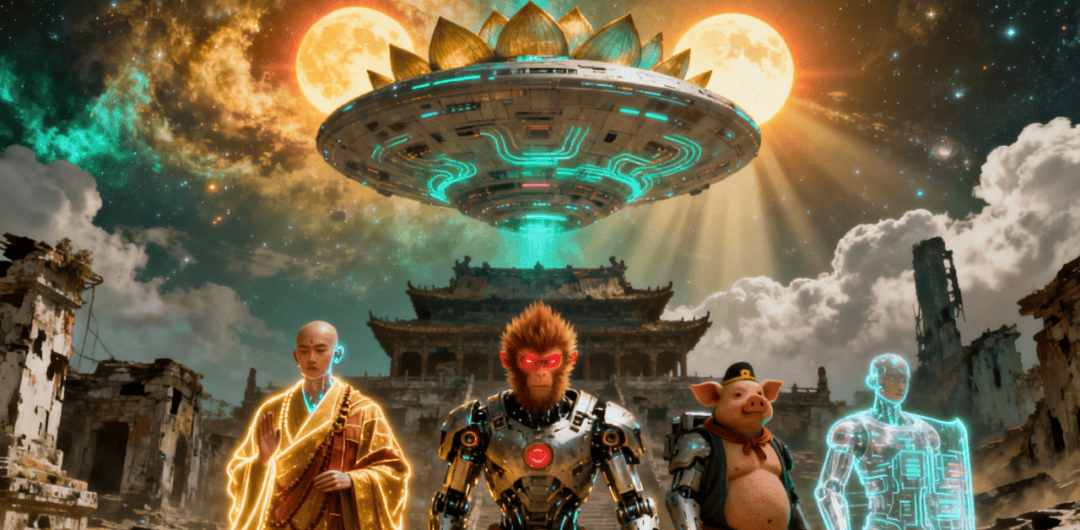
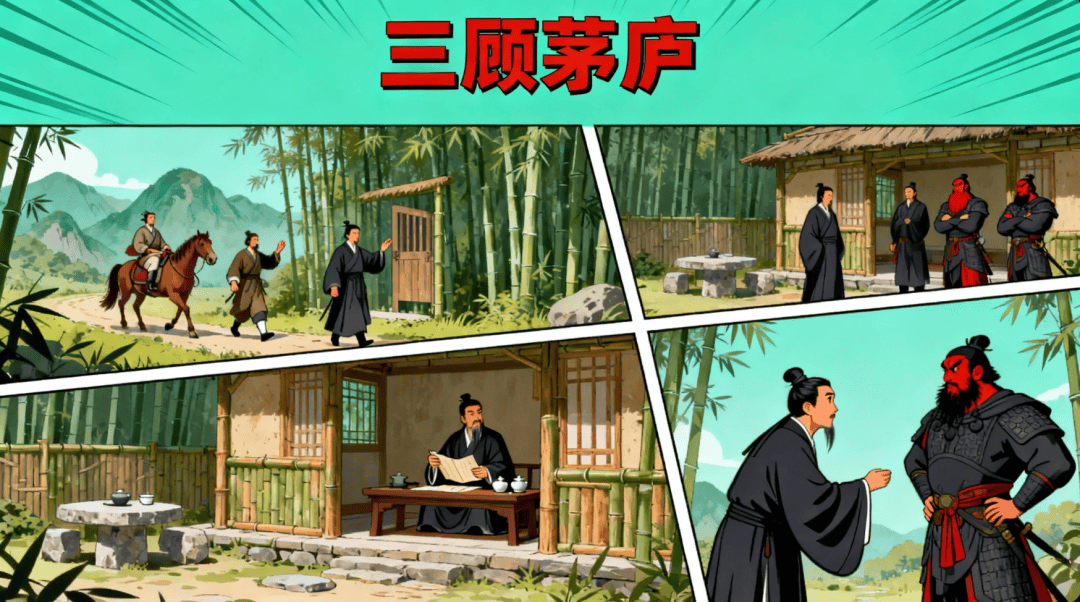
The second stage involves AI and writing. Participants will utilize the AI Hack Stack platform to explore the application of artificial intelligence in literary creation. Through the appreciation and adaptation of Chinese classic literary works (such as "Nüwa Mends the Sky," "The Orphan of Zhao," "Journey to the West," "Romance of the Three Kingdoms," "Dream of the Red Chamber," "Water Margin," "Strange Tales from a Chinese Studio," "Memories of My Childhood," "Thunderstorm," etc.), they will learn the characteristics of different literary genres and apply AI tools for creative writing and adaptation.
③ Python AI 4-3 AI and Science
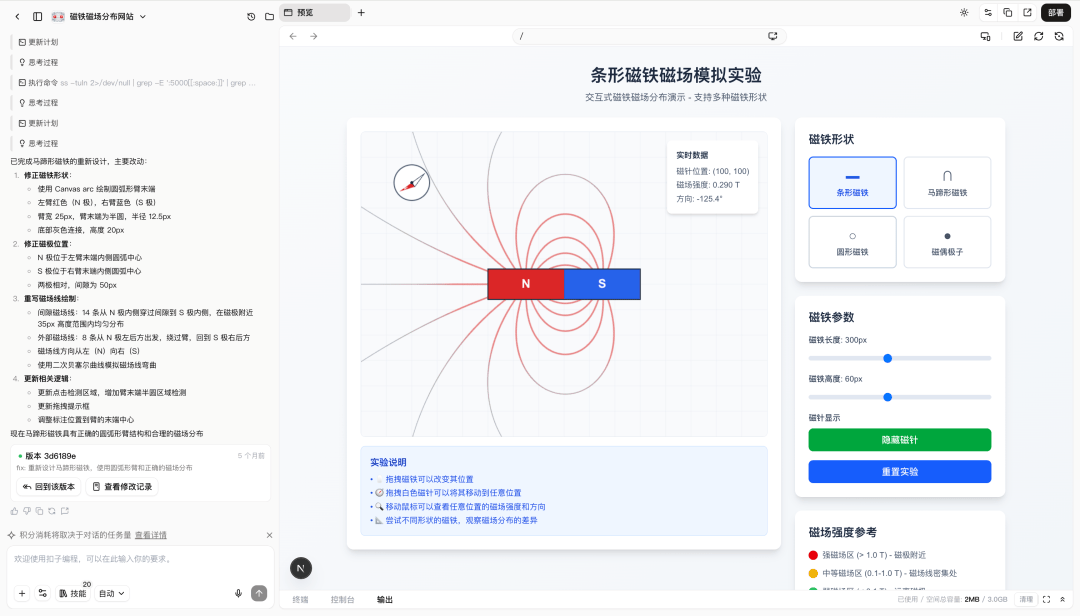
The third stage focuses on AI and science. Students will utilize the AI Hack Stack platform to explore the applications of artificial intelligence in the field of natural sciences. This encompasses interdisciplinary knowledge such as physics (Newton's laws, electromagnetism, wave propagation), chemistry (chemical reactions and their applications in daily life), biology (ecosystems, species evolution, photosynthesis, cell division), and earth science (the relationship between the sun and the earth). Through this exploration, students will cultivate a spirit of scientific inquiry and critical thinking.
④ Python AI 4-4 AI and Writing
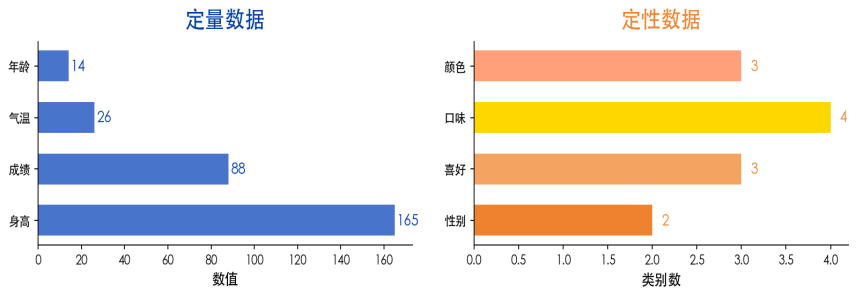
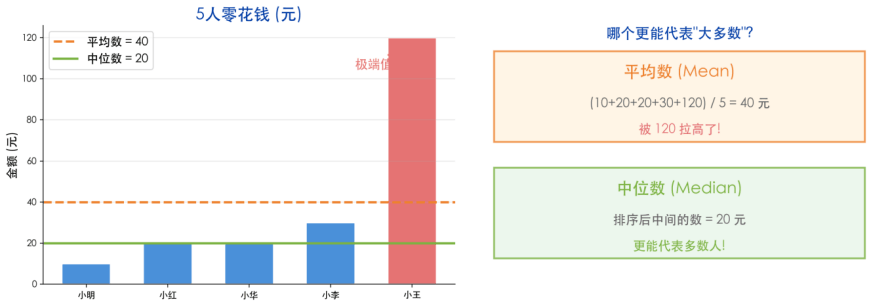
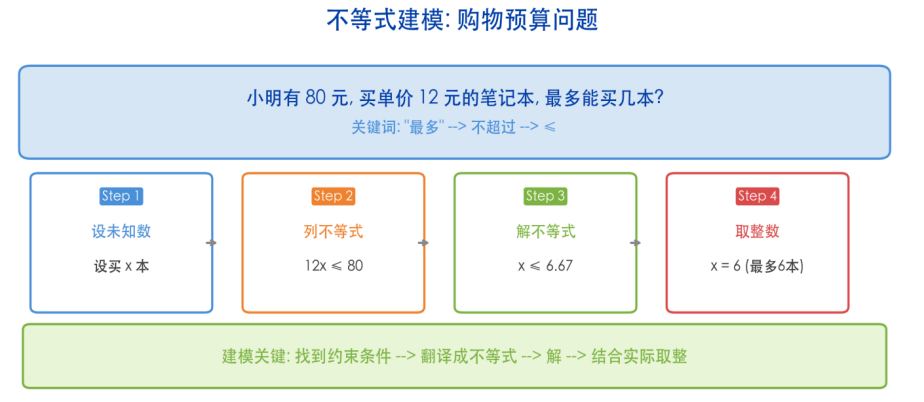
The fourth stage involves AI and statistical mathematics. Students will utilize the AI Hack Stack platform to learn core concepts in statistics and mathematics. Starting with data visualization tools such as histograms and box plots, they will master statistical knowledge including data distribution analysis, outlier identification, normal distribution, and probability analysis. Furthermore, they will learn algebraic fundamentals (expressions, linear equations, inequalities) and functional analysis, cultivating data thinking and mathematical modeling skills.
With the increasing knowledge of Python programming, artificial intelligence, and scientific innovation, children can participate in the following activitiesHigh-quality competitionPut what you have learned into practice and use competition awards to help children grow!

[Event Introduction]
The National Youth Labor Skills and Intelligent Design Competition, hosted by the China Association for Automation, is an event that emphasizes the integration of AI (Artificial Intelligence) with agricultural production. It is dedicated to cultivating young people's diverse thinking, innovation ability, and comprehensive quality. The competition not only assesses children's logical thinking and algorithmic thinking, but also aims to let them experience the joy of AI empowering reality through the competition, and apply advanced technology to practical life and labor production!
[Recruitment target] Grades 4-9
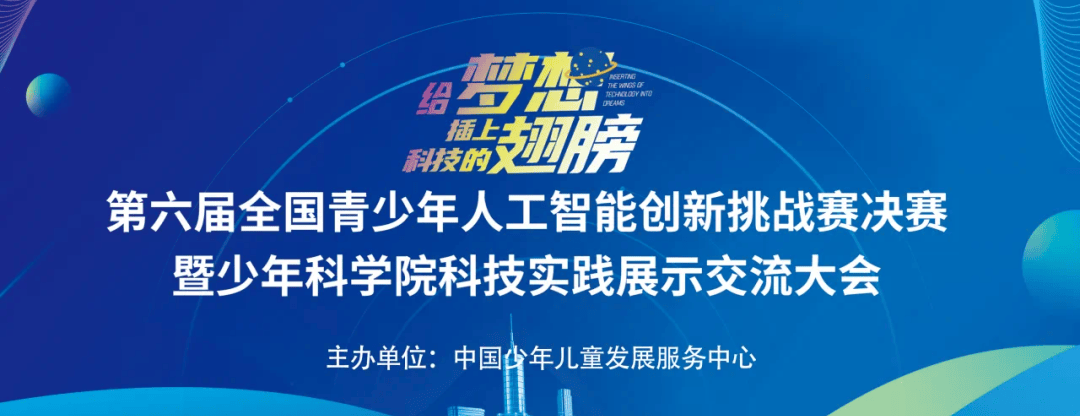
[Event Introduction]
The National Youth Artificial Intelligence Innovation Challenge is a nationwide competition hosted by the China Youth Development Service Center. Each year, over 50,000 youth representatives participate in it. These students demonstrate comprehensive development in their overall qualities, particularly excelling in AI technology learning and innovation.
[Recruitment target] Grades 4-9
[Event Introduction]
The China Soong Ching Ling Foundation established the "Soong Ching Ling Children's Invention Award" in 2001. This competition is a youth science and technology activity approved by the Ministry of Science and Technology.
Co-hosted by the China Soong Ching Ling Foundation and the China Invention Association, the event has successfully held 18 rounds of selection and awarding activities, with over 1 million primary and secondary school students participating. The award-winning experiences will be recorded in students' files.
[Recruitment target] Grades 3-9
Through innovative practices in these high-quality competitions, children can gain a deeper understanding of programming, enhance their innovative thinking in the application of artificial intelligence technology, win awards and honors, and become proficient in AI at an early age!
 TikTok
 WeChat Official Account
 Headline