WeChat Official Account
WeChat Official Account
 APP Download

Scan the QR code Download the STEM STAR APP
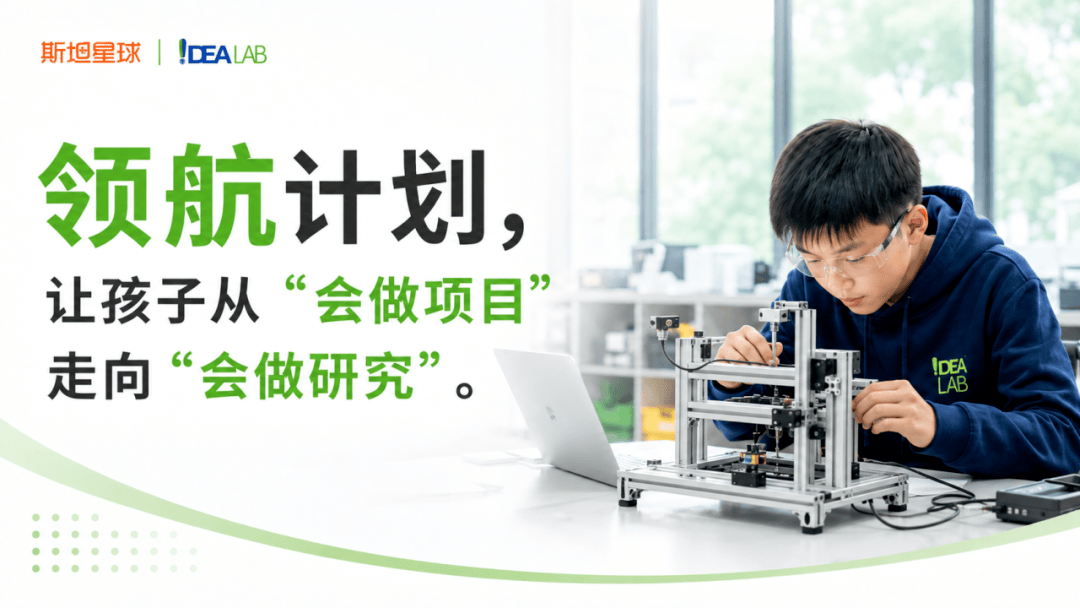
When a child completes his first original science and technology innovation project, parents often see a gratifying change - he starts to actively observe life and try to identify problems; he draws design diagrams, selects hardware, and writes programs; when the project runs successfully for the first time, he truly feels that an idea can be turned into reality through his own efforts.
This is precisely the important experience that the STEM STARideaLab launch program brings to children: starting from a real problem and completing their first creation. But when children are already capable of working on projects, what should they learn next? Should they use more sensors? Learn more complex programming? Or create a project with more functions and a cooler appearance? These can certainly allow the project to continue to be upgraded.
But what truly determines whether a child can progress from "project practice" to "scientific inquiry" is not how much technology is used in their work, but whether they can continue to answer: Does this problem really exist? Who is being affected by it? Has anyone studied or solved this problem before? Where exactly is my innovation? Does the fact that the work can run mean it really works? Can I prove my conclusion with experiments and data?
When a child starts to answer these questions seriously, what he experiences is no longer just a crafting activity, but a research project.
This is precisely the advancement that the STEM STARideaLab pilot program aims to guide children towards achieving:Guide children from "being able to conduct projects" to "being able to conduct research" .
Making it is just the beginning of scientific inquiry
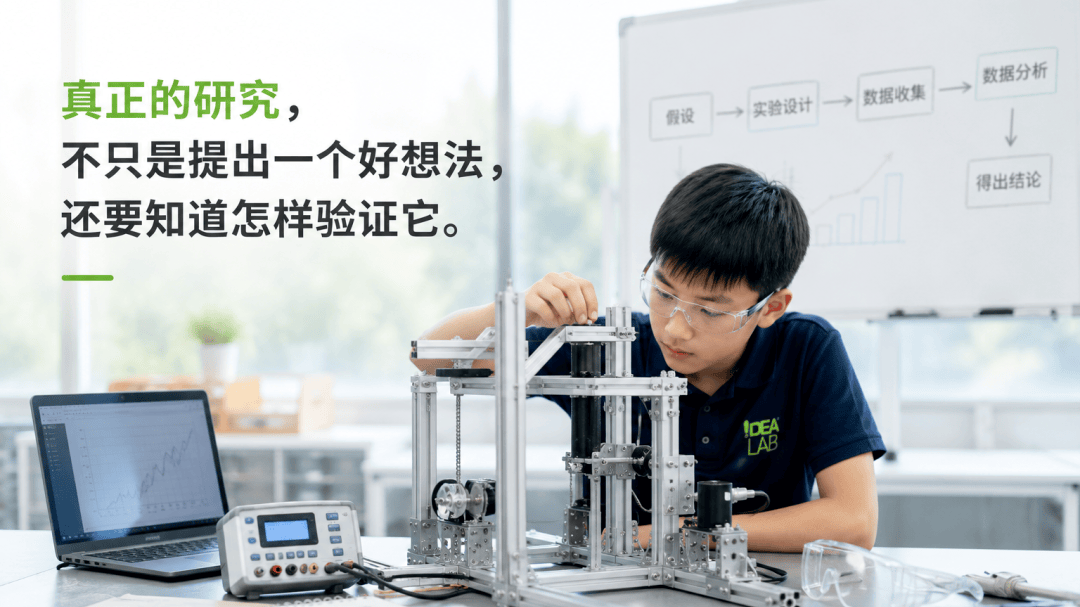
In a science and innovation project, when the program runs, the lights turn on, and the motor rotates, children are prone to think, "My project is complete." However, in real research, this moment is not the end; it is merely the starting point for verification work.
For example, a child designed an intelligent reminder device for public venues. The device successfully emitted a warning sound, which only proves that it "can work". Next, the child needs to further investigate: how far away can the warning sound be heard? Will different environmental noises affect the reminder effect? Which color of light is easier for users to notice? Are the user experiences the same for people of different ages and different needs? What changes will happen to the effect after changing the device's location or parameters?
He needs to devise a testing plan, control testing conditions, record data, compare results, and continue to revise the work based on evidence. At this point, the child is no longer just saying, "I think this design is good." Instead, they can say, "Based on my experimental results, under these conditions, this plan performs more effectively."
Moving from "I think" to "data shows" is a very important step in scientific inquiryIt is also the clearest distinction between the STEM STARideaLab pilot program and ordinary interest projects.
From setting sail to guiding the ship, what progresses is not just the technical difficulty
The Sailing Plan helps children establish a complete project awareness: identifying problems, designing solutions, learning techniques, creating prototypes, testing and modifying, and presenting and expressing.
The Pilot Program, building on this foundation, further incorporates academic scientific inquiry: field research, needs analysis, literature review, project novelty search, experimental design, data analysis, thesis writing, and academic defense. It is not simply about making hardware more complex or asking children to write more code, but rather requires children to make the entire project more evidence-based, logical, and able to withstand scrutiny.
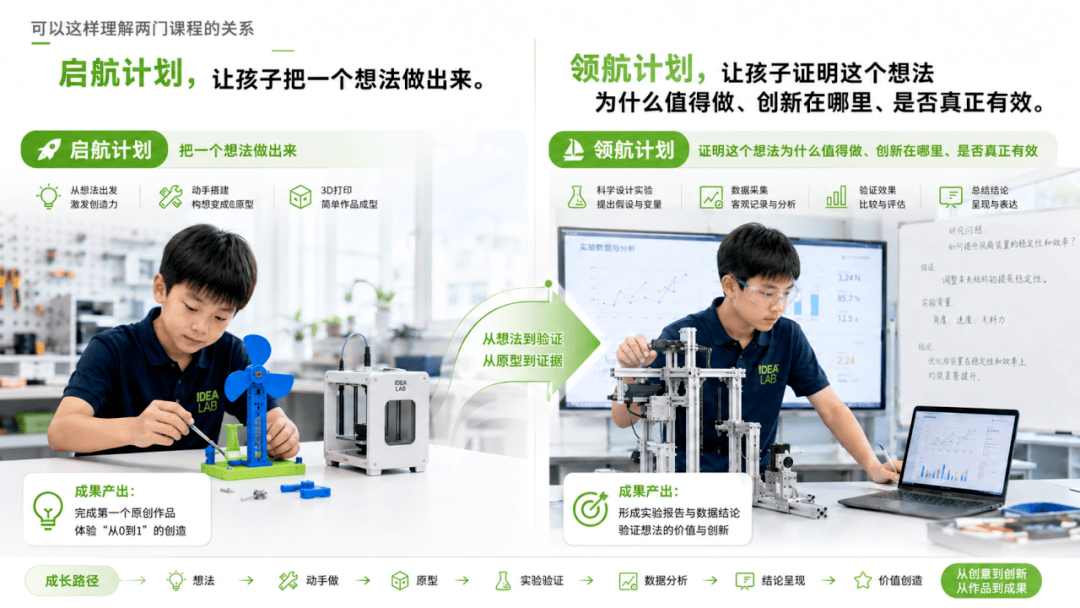
The relationship between the two courses can be understood as follows:The Launch Plan enables children to bring an idea to life. The Pilot Plan allows children to demonstrate why the idea is worth pursuing, where the innovation lies, and whether it is truly effective.
Therefore, the Navigator Program is particularly suitable for children who have already experienced a complete project, possess preliminary scientific and technological innovation literacy, and are ready to enter the next stage. They already know how to turn their ideas into works, and now they need to further learn:How to transform an initial creation into a complete, rigorous, expressible, and verifiable researchMeanwhile, students who have independently completed a complete science and technology innovation project in other courses or activities can also enter the course learning by passing the introductory assessment.
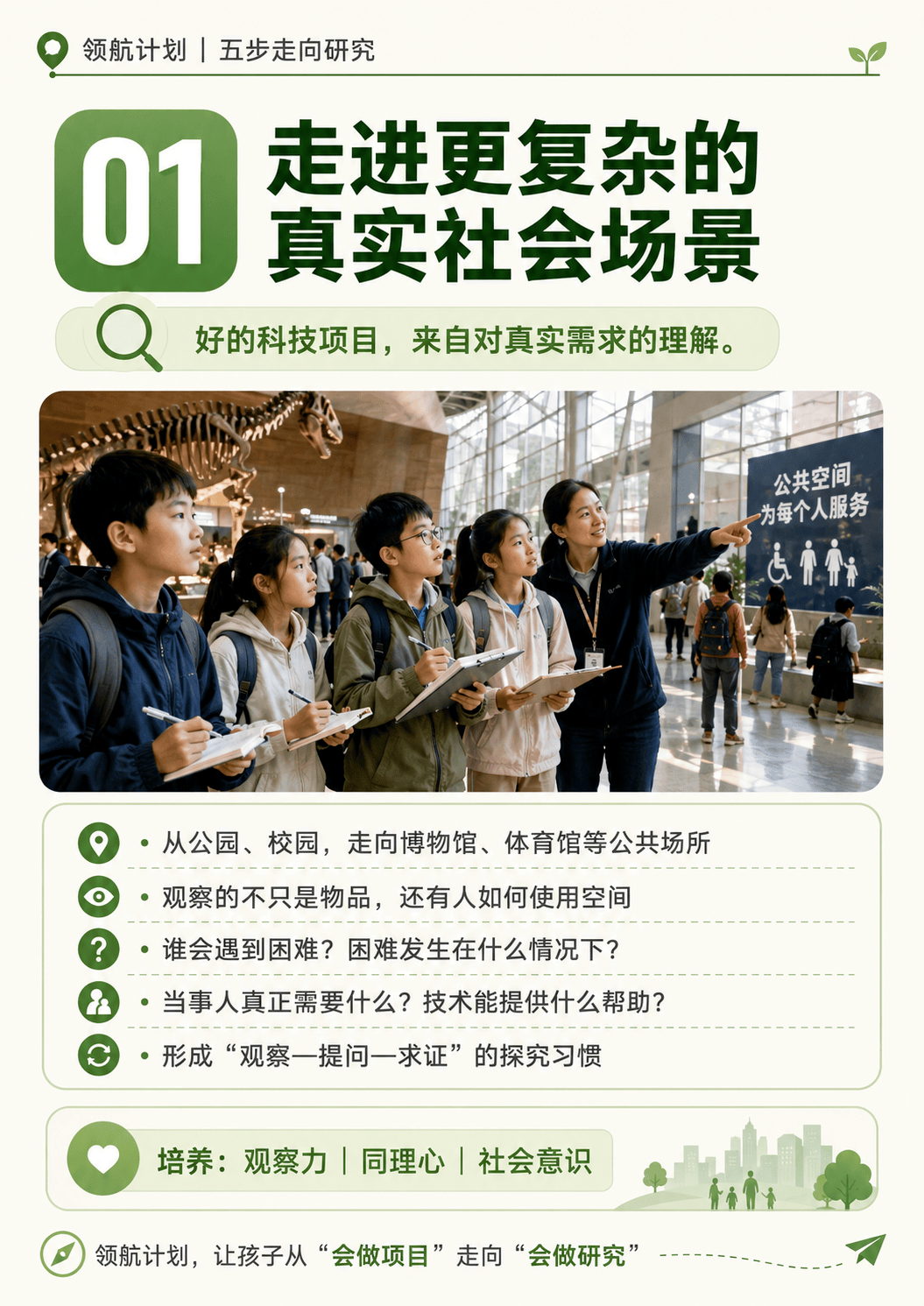
The five stages of learning in the Pilot Program (with a half-year cycle)

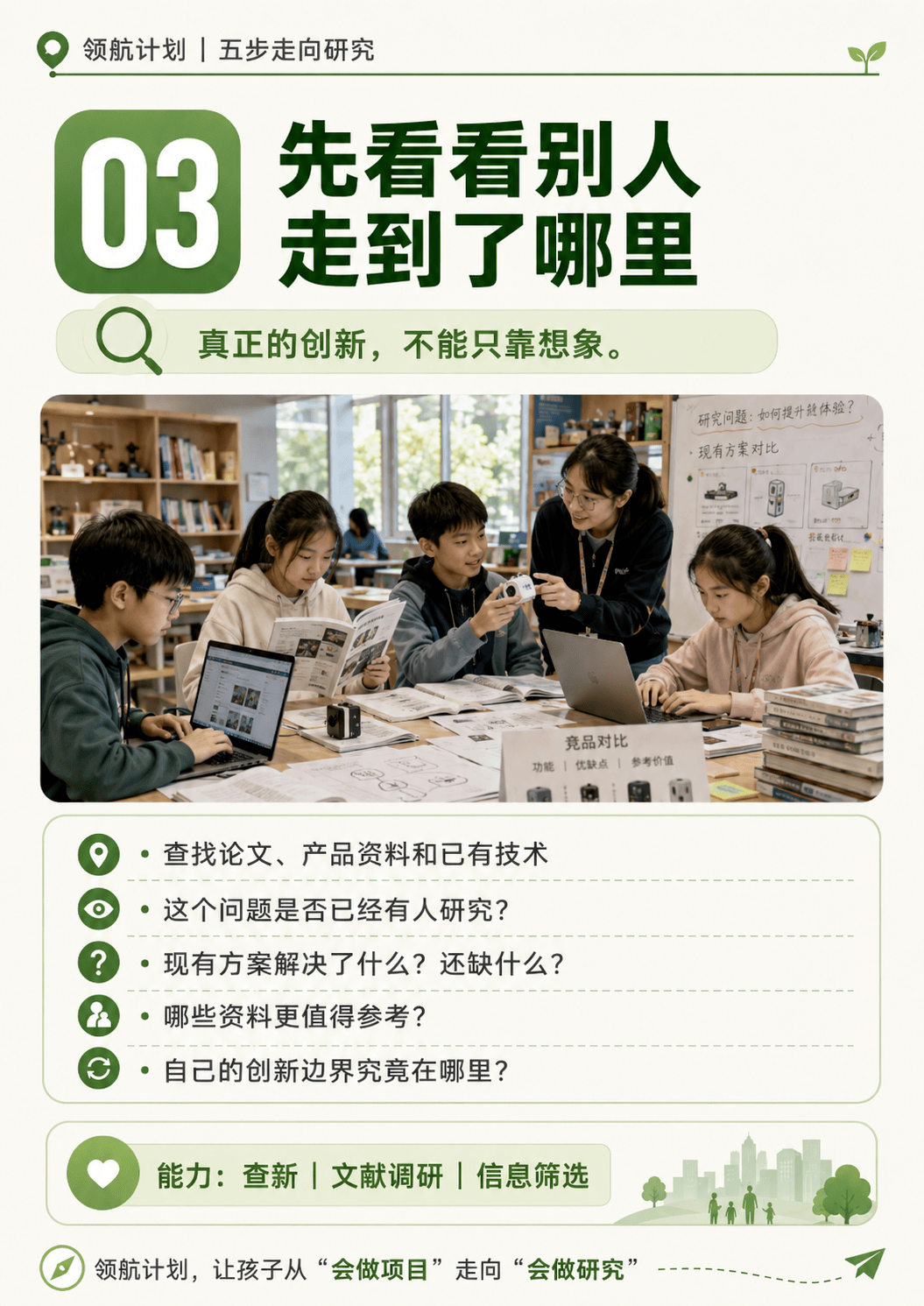
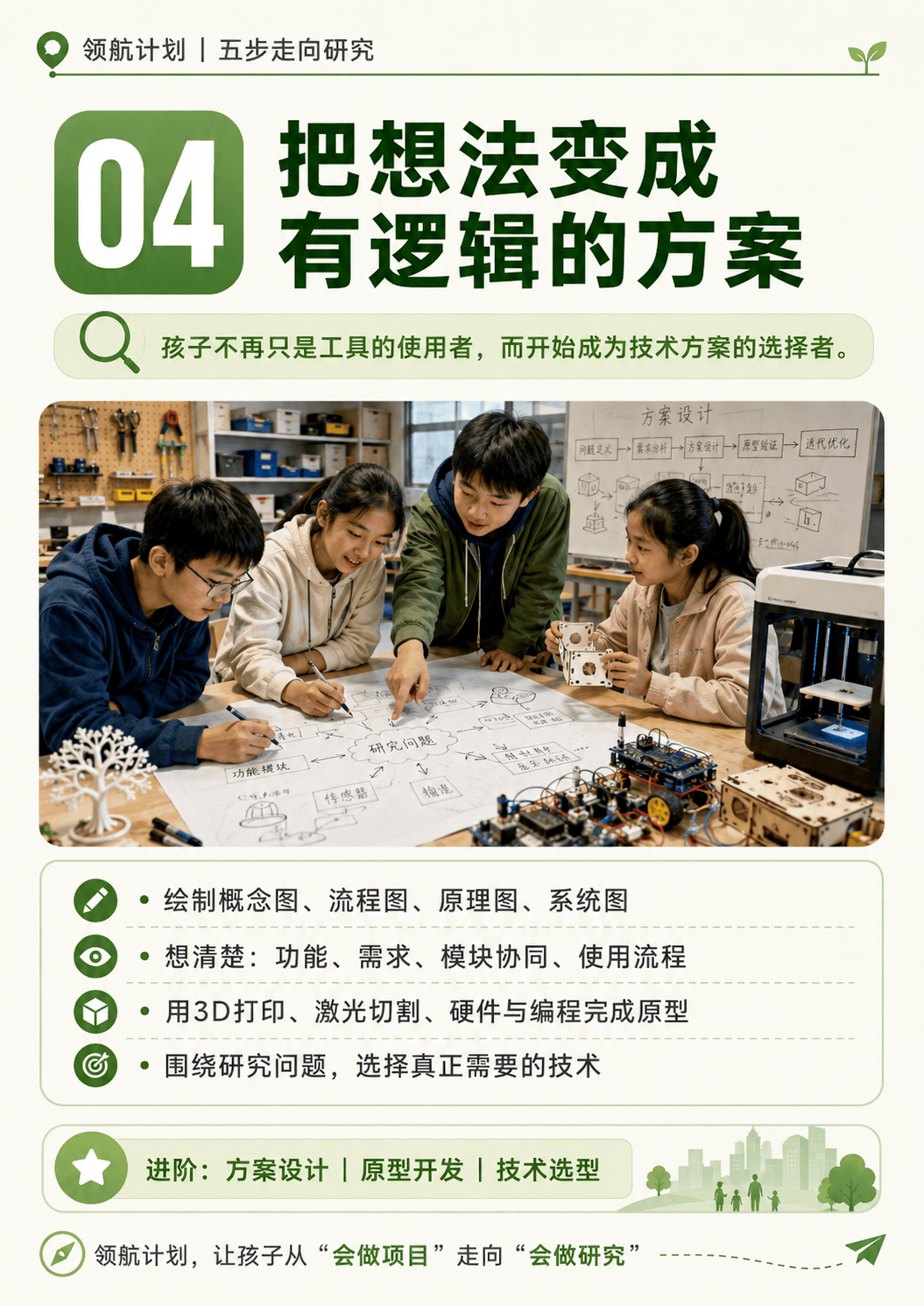
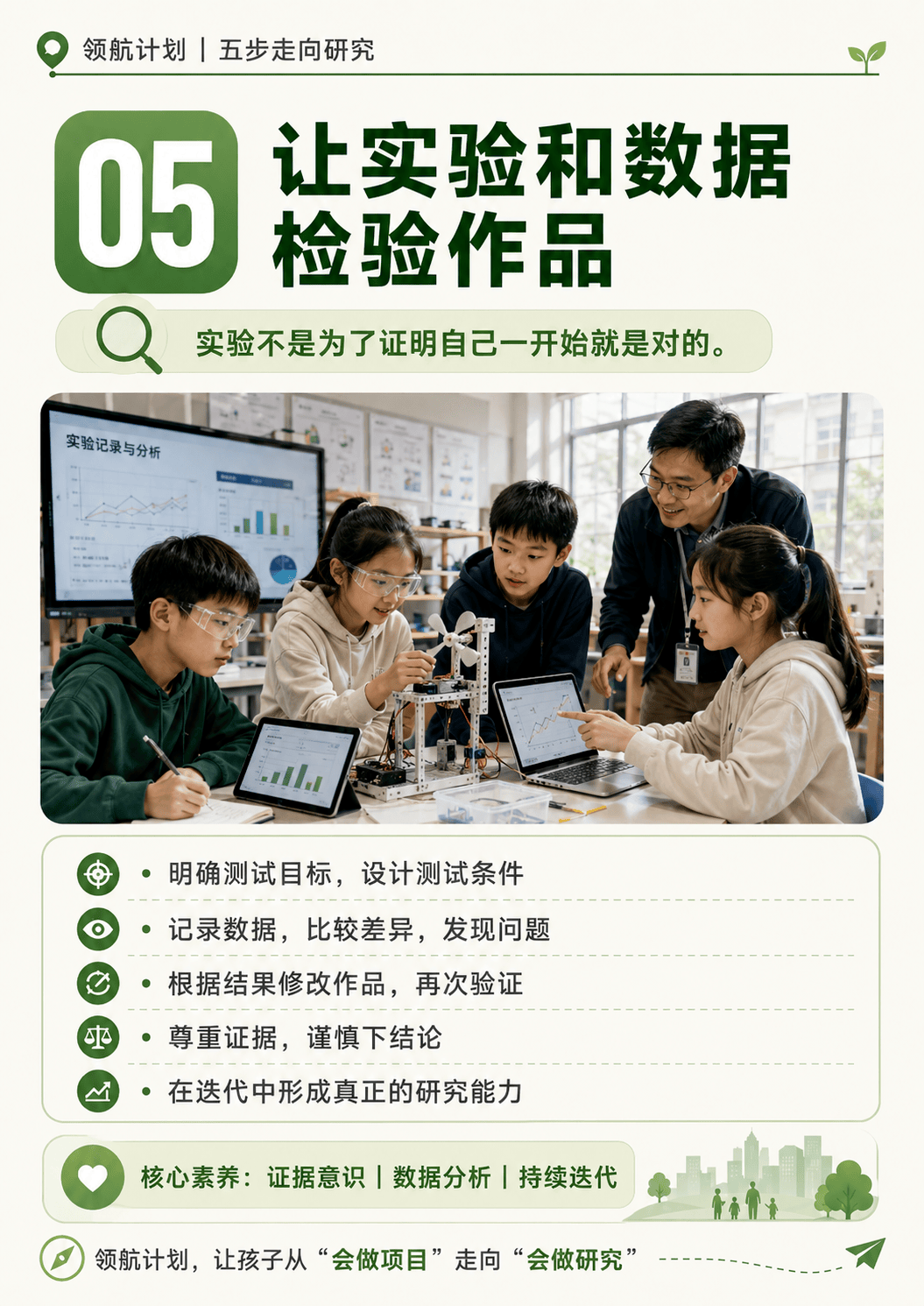
Thesis is not a sudden assignment that appears at the end of the course
When many parents see "essay writing", they may have doubts: Is it too early for a sixth-grade child to write an essay? Is it necessary to suddenly write a long article after the project is over? Can the child really understand what they are writing about?
The Navigator Program does not treat writing papers as a task divorced from practiceThe course adopts a modular approach to essay writing.
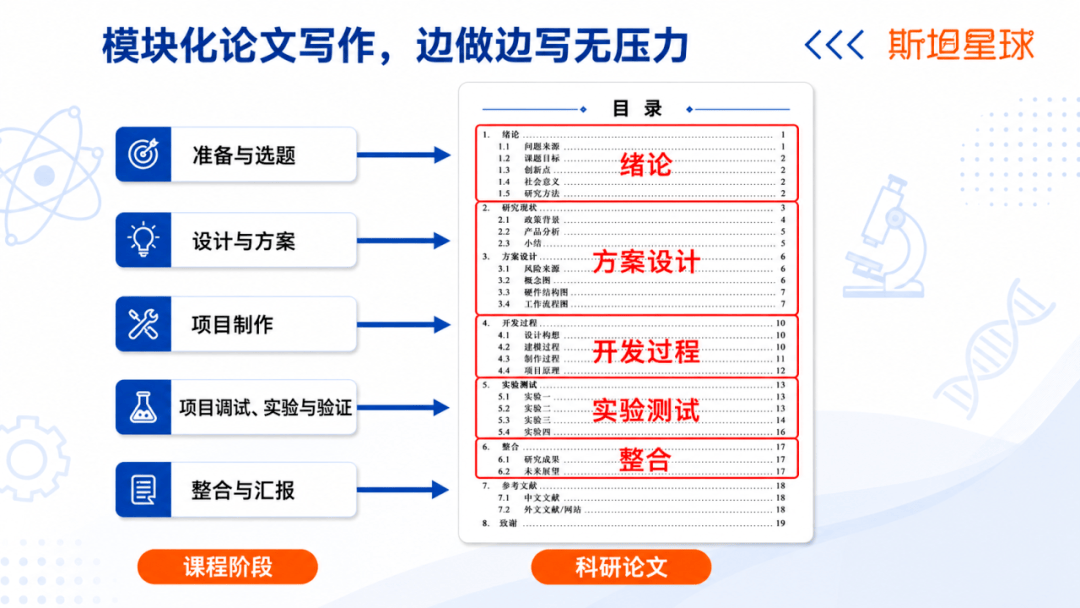
Upon completing each practical phase, the child simultaneously organizes the corresponding research content: during the preparation and topic selection phase, he records the source of problems, research findings, and social significance; during the scheme design phase, he organizes concept diagrams, functional processes, and design principles; during the project production phase, he records the development process, technology selection, and prototype changes; during the experimental verification phase, he saves test schemes, experimental data, and result analysis; towards the end of the course, he supplements with abstracts, conclusions, and future prospects, and completes overall revisions.
That is to say, the child is not faced with a blank document at the end, recalling what happened half a year ago. Instead, he gradually accumulates his own thesis materials during the project's progression. The thesis is not an additional material to make the project appear more advanced. It is a process where the child organizes observations, research, design, production, experiments, and conclusions into a complete logic.
Therefore, we do not undertake projects solely for the purpose of writing a paper. Instead, it naturally leads to the formation of a paper as the child completes a relatively complete and rigorous study.
Why is an introductory test necessary for the pilot program?
The Pilot Program is targeted at students in grade 6 and above. It requires children to have independently completed relatively complete science and technology innovation projects and possess preliminary reading, analysis, and expression skills. Therefore, all eligible students who want to enroll need to take the Pilot Program introductory test.
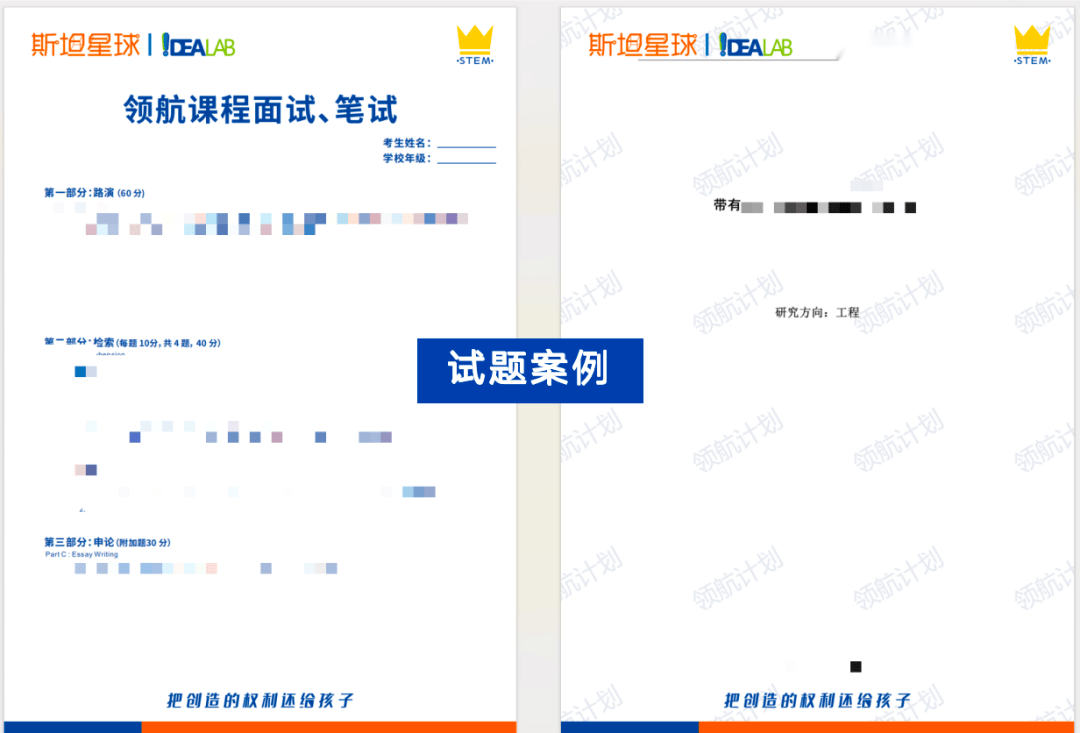
The introductory assessment includes links such as paper reading, information retrieval, content summary, and thinking expansion. Children need to read a previous scientific and technological innovation paper, extract the main information from it, and explain the project logic in their own language; they can also try to propose optimization directions. This test is not intended to judge whether a child is "smart enough". Its more important purpose is to determine whether the child is currently suitable for entering the academic inquiry stage; whether they can understand relatively complete project information; whether they are willing to actively read, analyze, and express; and whether they have the foundation to complete subsequent research tasks.
The purpose of setting an introductory test is not to create a barrier, but to ensure that the difficulty of the course truly matches the child's current developmental stageChildren can see through the introductory test where they have grown from their first encounter with science and innovation, and what areas they need to prepare for before entering the next stage. For students who have already completed complete projects in other courses, school activities, or competitions, they can also apply to enter the Pilot Program in the same way.
The significance of advancement is not to become a "little scientist" earlier
We do not necessarily expect every child participating in the pilot program to choose a career in scientific research in the future. Nor do we wish to prematurely define their future based on a single paper, competition, or project.
The Project Lead the Way truly aims to cultivate a long-term usable ability: when faced with a complex problem, not rushing to accept the first answer; being able to actively seek information and judge whether the information is reliable; being able to distinguish between facts, speculations, and personal feelings; being able to test viewpoints through experiments and data; being able to clearly express one's research process; and also being able to face challenges, reflect on, and revise one's conclusions.
These abilities not only pertain to scientific innovation. They also influence a child's future academic pursuits, independent research, project collaboration, and public expression. When a child begins to comprehend:A viewpoint needs basis; a conclusion needs evidence; an innovation needs to be built upon real needs and existing research - he has already completed an important upgrade in learning methods.
STEM STARideaLab Pilot Program, guiding children from "being able to do projects" to "being able to do research".
About STEM STAR
STEM STAR, founded in 2016, is a globally renowned technology education brand. Drawing on international advanced STEM education concepts and practices, we have carefully crafted an integrated STEM & AI curriculum system. Tailored to the interests and strengths of young people aged 3-18, we have planned four core learning paths: artificial intelligence, informatics Olympiad, robot programming, and scientific and technological innovation, providing diverse development directions for children's technological growth.
Specifically, it covers a wide range of content, including Python AI programming, information and communication technology (ICT) C++, VEX robotics, scientific and technological innovation, scientific experiments, building blocks, mechanical engineering, thinking training, outdoor research and study, etc. Leveraging high-quality software and hardware platforms and cutting-edge technologies from both domestic and international sources, it helps children better understand and apply these concepts.
As an excellent brand focusing on science and technology education, STEM STAR has established over 140 learning centers in more than 70 cities both domestically and internationally. In recent years, its brand influence has extended globally, with active student groups in countries and regions such as the United States, the United Kingdom, and Australia.
Since its inception, STEM STAR has always adhered to the belief of "benefiting children and being responsible for parents", adhered to the educational philosophy of "teaching for understanding and learning for innovation", and is committed to becoming a benchmark for global children's STEM education.
 TikTok
 WeChat Official Account
 Headline